Picking a powder coating finish feels simple until you are actually standing in front of dozens of options and realizing the decision matters a lot more than you thought. The finish you choose does not just affect how your project looks. It affects how long it lasts, how well it holds up to wear and weather, and whether it fits the environment it is going into. Make the wrong call, and you end up with a finish that chips, fades, or simply does not perform the way you needed it to.
The good news is that once you understand what separates one powder coating finish from another, the decision gets much easier. This guide walks you through the key factors to consider so you can walk into your next project with a clear direction and confidence that the finish you choose will do exactly what you need it to do.
Start With the Environment Your Project Will Live In
The single most important factor in choosing a powder coating finish is the environment the finished part will be exposed to. A decorative interior piece has very different needs than an outdoor fixture that faces rain, UV exposure, and temperature swings every day. Getting this wrong is one of the most common and costly mistakes people make when selecting a finish.
For outdoor applications, you need a powder coating finish that is formulated to resist UV degradation. Polyester-based powders are the most widely used option for exterior work because they hold their color and gloss level significantly better than other chemistries when exposed to direct sunlight over time. A finish that looks sharp on day one but fades to a chalky, washed-out version of itself within a season is not doing its job.
Indoor parts that will not face UV exposure or moisture have more flexibility. Epoxy-based powder coatings, for example, offer excellent chemical resistance and hardness indoors but will chalk and fade quickly if used outside. Knowing where your part is going before you choose your powder coating finish will immediately narrow your options and save you from a frustrating redo.
For parts that will face salt spray, high humidity, or chemical exposure, such as marine hardware or industrial equipment, a hybrid powder that combines the toughness of epoxy with the weather resistance of polyester gives you the best of both worlds. These formulations are purpose-built for aggressive environments and offer a level of corrosion protection that a standard decorative finish simply cannot match.
Understand the Difference Between Gloss Levels
Gloss level is one of the most visible characteristics of any powder coating finish, and it is also one of the most misunderstood. Many people default to high gloss because it looks polished and clean, but high gloss is not always the right choice and can actually work against you in certain applications.
Gloss levels are measured on a scale from flat or matte at one end to high gloss at the other, with satin and semi-gloss sitting in between. A high gloss powder coating finish reflects light sharply and gives metal parts a smooth, mirror-like appearance. It looks impressive, but it also shows every scratch, fingerprint, and surface imperfection more clearly than a lower gloss option would.
Matte and satin finishes are increasingly popular for exactly that reason. They hide minor surface variations better, hold up visually to handling and wear, and tend to look more intentional on architectural, automotive, and industrial pieces where a sleek but not flashy look is the goal. A satin powder coating finish also tends to photograph and present well in product and portfolio work.
The environment plays into gloss selection too. High gloss finishes can become slippery when wet, which is a real concern on surfaces like steps, platforms, or handrails. In those situations, a low gloss or textured powder coating finish is not just a style choice. It is a safety decision.
Texture Options and When to Use Them
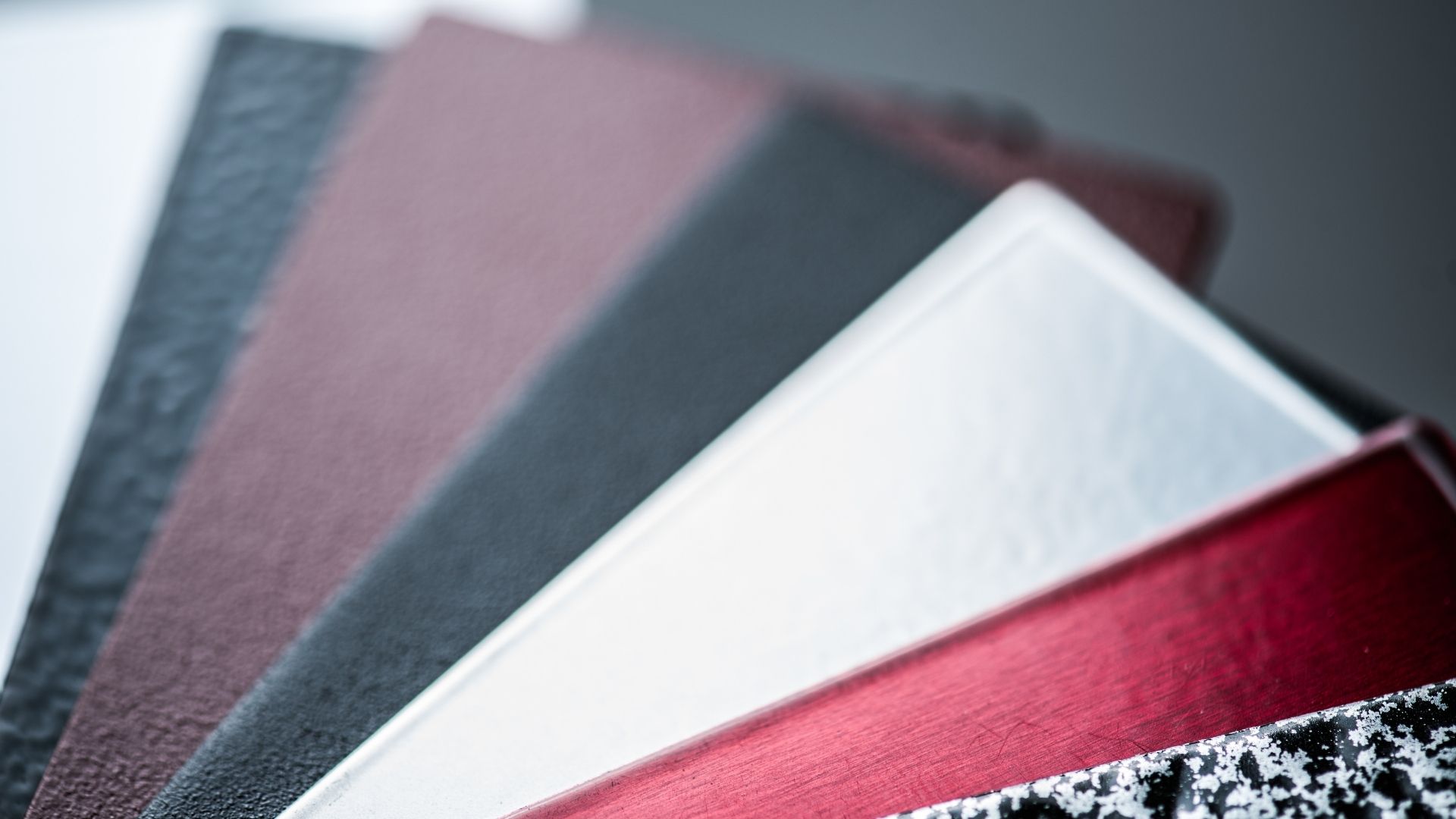
Beyond gloss level, powder coating offers a range of texture options that add both visual interest and functional benefit. Smooth finishes are the baseline, but wrinkle, sand, and hammertone textures each serve specific purposes that go well beyond aesthetics.
Wrinkle textures create a tight, rippled surface pattern that is excellent at hiding surface irregularities in the base metal. If you are working with a part that has minor weld marks, pitting, or surface prep imperfections that would show through a smooth finish, a wrinkle texture powder coating finish is a practical solution that looks deliberate and professional rather than like a cover-up.
Hammertone textures give a hand-forged, metallic appearance that works well on brackets, enclosures, and decorative hardware where a traditional or industrial aesthetic is desired. Sand textures fall somewhere in between, offering a subtle grain that breaks up flat surfaces without drawing as much attention as a full wrinkle or hammertone pattern.
Textured finishes also tend to be more forgiving in high-contact applications. The surface variation helps disguise everyday wear like minor scuffs or handling marks that would be much more obvious on a smooth, high-gloss powder coating finish.
Matching Your Powder Coating Finish to the Base Material
The material you are coating matters more than most people realize when selecting a powder coating finish. Steel, aluminum, cast iron, and galvanized metal all behave differently in the curing oven and respond differently to various powder chemistries. Choosing a finish without factoring in the substrate is a recipe for adhesion problems down the line.
Steel is the most forgiving substrate for powder coating and accepts nearly any finish chemistry well, provided the surface has been properly prepared through sandblasting or chemical pretreatment. Aluminum requires a bit more attention because its surface oxidizes quickly and needs proper etching or conversion coating before powder is applied to ensure the finish bonds correctly.
Thinner gauge metals and parts with intricate shapes can present challenges during curing, since uneven heat distribution can affect how uniformly the powder coating finish flows and cures across the surface. Working with an experienced shop that understands how different materials behave will help you avoid surprises in the final result.
Cast iron and parts with heavy mill scale or rust require thorough sandblasting before any powder coating finish is applied. Skipping or cutting corners on surface prep is the leading cause of premature finish failure, regardless of how good the powder itself is. The finish is only as strong as the surface it is bonded to.
Color Selection and Long-Term Performance
Color is often the first thing people think about when choosing a powder coating finish, and while it is important, it should come after you have locked in your chemistry, gloss level, and texture decisions. Color is the final layer of the decision, not the starting point.
That said, color does have performance implications worth understanding. Darker colors, particularly blacks and deep blues, absorb more heat and can experience slightly more thermal stress in extreme outdoor conditions than lighter colors. For most applications this is a minor factor, but for parts exposed to prolonged direct sun in hot climates, it is worth considering.
According to the Powder Coating Institute, powder coating is available in thousands of colors and an enormous range of special effects, including metallics, candies, translucent, and fluorescents. If you have a specific color in mind from a reference like RAL or Pantone, most professional shops can source or match it closely. Custom color matching is one of the real advantages of working with a dedicated powder coating shop rather than a general finishing service.
For projects where color consistency across multiple parts or batches matters, make sure you communicate that upfront with your finishing shop. Powder lots can have minor variation between batches, and a quality shop will manage this proactively to keep your finished parts looking cohesive.
Functional Finishes for Specialized Applications
Not every powder coating finish is chosen primarily for appearance. There is a growing category of functional powder coatings designed to deliver specific performance properties that go beyond corrosion and UV resistance.
Heat-resistant powder coatings are formulated to maintain their integrity at elevated temperatures and are commonly used on engine components, exhaust systems, grills, and fireplace surrounds. Standard powder coatings typically begin to degrade above 250 to 300 degrees Fahrenheit, so if your part will be exposed to sustained heat, a specifically rated high-temp powder coating finish is not optional.
Anti-graffiti coatings are another specialized option used on public infrastructure, signage, and architectural elements. These finishes create a surface that resists paint adhesion and makes cleanup significantly easier. For municipalities, property managers, and commercial projects in high-traffic areas, this type of powder coating finish can dramatically reduce long-term maintenance costs.
Antimicrobial powder coatings are also available for applications in healthcare, food processing, and public facilities where surface hygiene is a priority. These finishes incorporate agents that inhibit the growth of bacteria and mold on the coated surface, adding a layer of protection that standard finishes simply do not offer.
Bringing It All Together
Choosing the right powder coating finish is not about picking the color that looks best in a swatch book. It is about understanding where your project is going, what it will face, and what performance you need out of the surface over time. When you approach the decision that way, the right powder coating finish becomes obvious rather than overwhelming.
Start with environment, work through gloss and texture, factor in your substrate, and finish with color. That sequence will lead you to a finish that looks great on day one and still looks great years down the road. The best powder coating finish is the one that earns its keep long after the project is done.
Not Sure Which Finish Is Right for You?
Our team at Liberty Powder Coating has helped customers across Michigan find the right finish for every kind of project, from heavy industrial components to custom automotive parts and everything in between. We would love to help you make the right call before you commit. Reach out to us today and let us walk you through your options so your project gets the finish it deserves.
