When it comes to finishing metal parts and equipment, powder coating and wet paint are the two options most manufacturers and businesses end up weighing against each other. Both can produce a good looking finish, but they perform very differently once durability, cost, and application come into play. Here’s how they actually compare for industrial applications.
How Each Process Works
Wet paint is applied as a liquid, typically sprayed onto a surface and left to air dry or cure with heat. It relies on solvents to keep the paint in a liquid state until it’s applied, and those solvents evaporate as the paint dries.
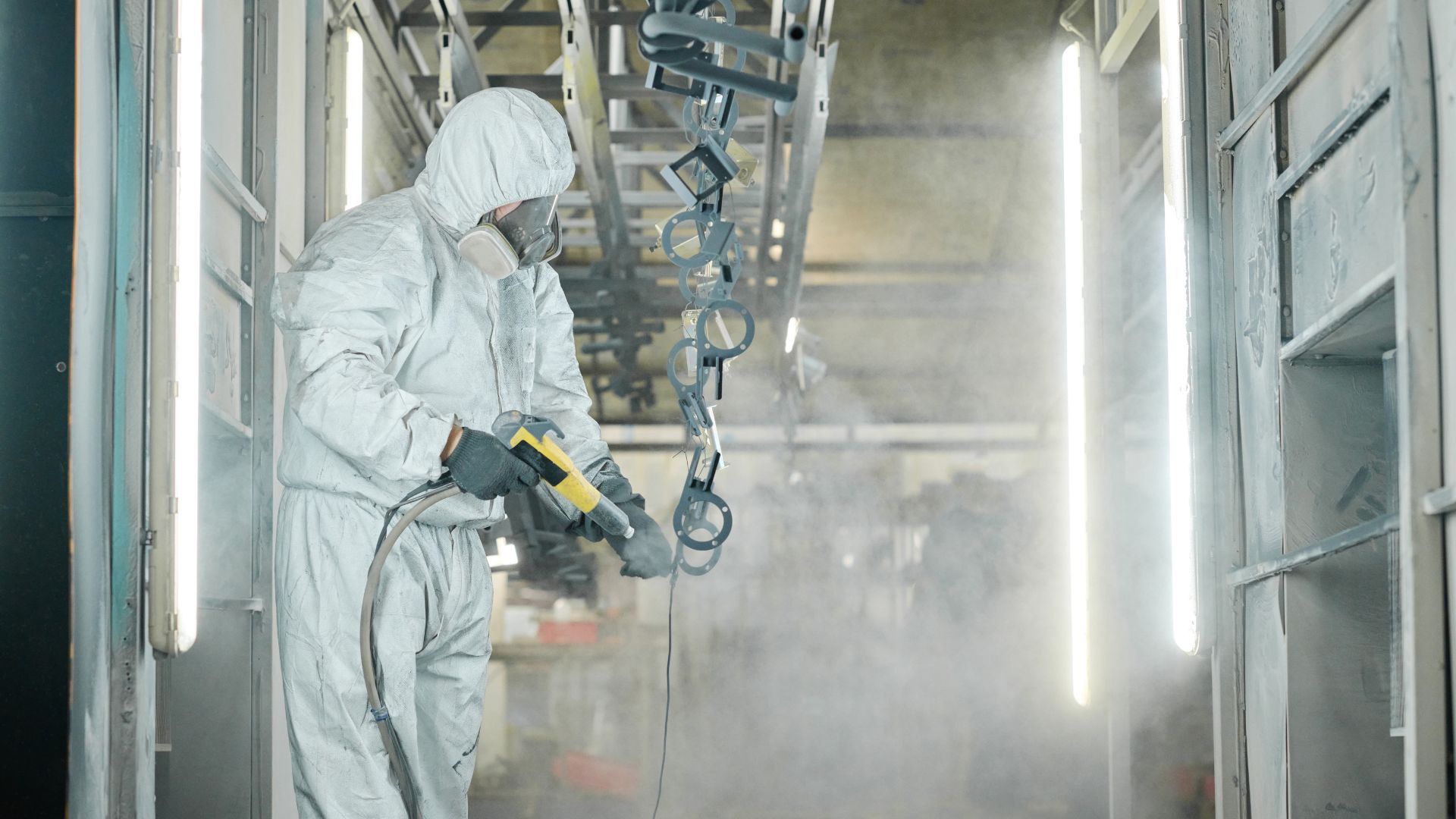
Powder coating works differently. A dry powder made of finely ground pigment and resin is electrostatically applied to a part, then cured under heat, which causes the powder to melt and form a hard, even finish. There are no solvents involved in the process, which plays a role in a lot of the differences between the two methods.
Durability Comparison
This is where powder coating tends to pull ahead for industrial applications. Because powder coating cures into a thicker, more uniform layer, it generally holds up better against chipping, scratching, fading, and corrosion compared to wet paint. For parts that deal with heavy use, outdoor exposure, or harsh environments, that added durability can significantly extend the life of the finish.
Wet paint can still perform well, especially for parts that aren’t exposed to constant wear or extreme conditions, but it typically wears down faster under the kind of daily stress industrial equipment often deals with.
Finish Quality and Consistency
Powder coating tends to produce a more even, consistent finish, since the electrostatic application process helps the powder adhere uniformly across the surface, including corners and edges that are harder to coat evenly with liquid paint. Wet paint can be prone to drips, runs, or uneven thickness if it’s not applied carefully, which becomes more of a concern on complex or detailed parts.
Environmental Considerations
Wet paint typically contains volatile organic compounds, known as VOCs, which are released into the air as the paint cures. Powder coating doesn’t use solvents, so it produces far fewer VOC emissions, making it a cleaner option from an environmental and workplace safety standpoint. Overspray from powder coating can also often be collected and reused, whereas wet paint overspray is typically wasted.
Cost Considerations
Initial equipment and setup costs for powder coating can be higher than wet paint, but the process tends to waste less material since unused powder can usually be recovered and reused. Wet paint often requires more material overall due to drips, overspray, and the need for multiple coats to achieve full coverage.
For high volume industrial applications, the reduced material waste and labor efficiency of powder coating often make it the more cost effective option over time, even if the upfront setup looks more expensive.
Turnaround and Application Speed
Powder coating generally cures faster than wet paint, especially compared to paint that air dries rather than being cured with heat. This can mean a quicker turnaround for parts, which matters for manufacturers working with tight production schedules.
Wet paint can sometimes be applied without specialized curing equipment, which occasionally makes it a simpler option for smaller shops or one-off projects that don’t justify the setup involved in powder coating.
Which Option Makes More Sense for Your Application
For most industrial parts, especially those exposed to outdoor conditions, heavy use, or Michigan’s demanding weather, powder coating tends to be the stronger choice thanks to its durability, consistency, and lower environmental impact. It’s a common choice across automotive, agricultural, manufacturing, and industrial applications for exactly these reasons.
Wet paint still has its place, particularly for smaller runs, certain color matching needs, or applications where the added equipment investment for powder coating doesn’t make sense for the scale of the project.
How Liberty Powder Coating Can Help
Liberty Powder Coating has been serving enterprise, industrial, and manufacturing clients throughout Southeastern Michigan since 2012. As a full service metal coating provider, we handle everything from surface prep and sandblasting to the powder coating process itself, with the capacity to handle parts up to 10,000 pounds and 20 feet long.
We’re ISO-9001:2015 certified company and AS-9100 certified company for anodizing, and we offer pickup and delivery. Give us a call or fill out the form on our website to get a free estimate on your next project, and we’ll help you figure out whether powder coating is the right fit for your parts.
Frequently Asked Questions
Is powder coating more durable than wet paint?
Yes, generally speaking. Powder coating cures into a thicker, more uniform layer that holds up better against chipping, scratching, and corrosion compared to wet paint, especially for parts exposed to heavy use or harsh conditions.
Does powder coating cost more than wet paint?
Initial setup costs can be higher, but powder coating tends to waste less material since unused powder can often be recovered and reused. For high volume industrial applications, that reduced waste often makes powder coating more cost effective over time.
Is powder coating better for the environment than wet paint?
Yes, powder coating doesn’t rely on solvents, so it produces far fewer VOC emissions compared to wet paint. Overspray can often be collected and reused as well, whereas wet paint overspray is typically wasted.
Which option cures faster, powder coating or wet paint?
Powder coating generally cures faster, especially compared to paint that air dries rather than being cured with heat. This can mean a quicker turnaround for parts on tight production schedules.
Is wet paint ever a better choice than powder coating?
It can be, particularly for smaller runs or specific color matching needs where the equipment investment for powder coating doesn’t make sense. For most industrial applications exposed to heavy use or harsh weather, though, powder coating tends to be the stronger long term option.
